


Keeping You Comfortable, Season After Season.
Family-owned
Service
Extended Warranties
Caldwell sits along the base of the First Watchung Mountain, where cold air settles into the borough’s older neighborhoods on winter nights. Many homes here were built in the 1920s through the 1950s, originally heated with oil or steam systems before being converted to forced air over the decades, and that history still shapes how furnaces perform today. J&M Cooling and Heating repairs furnaces throughout Caldwell with that mix of age and terrain in mind.
Furnace trouble in Caldwell often shows up gradually before a system fails outright. Watch for these common warning signs: Any one of these can be minor on its own, but together they usually mean the system is falling behind before a hard freeze puts it to the real test.
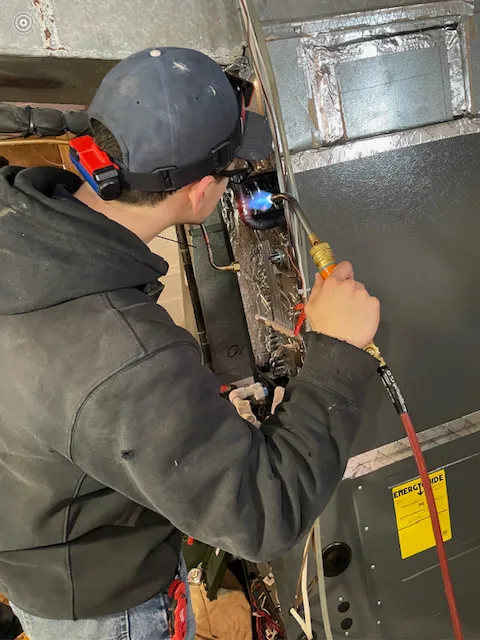
Caldwell’s older housing stock is the biggest factor behind most furnace calls in the borough. Many Colonials and Capes near downtown still run ductwork that was added decades after the home was originally built to accommodate a steam or oil system, and that retrofitted layout often restricts airflow more than homeowners realize. The hillside terrain adds a second layer, since cold air draining down from the ridge settles into low-lying yards and drafty older windows, forcing furnaces to run longer cycles than a similar system would need on flatter, more sheltered ground. Combine an aging system with a leaky envelope and a cold snap, and a furnace that seemed fine in November can struggle by January.
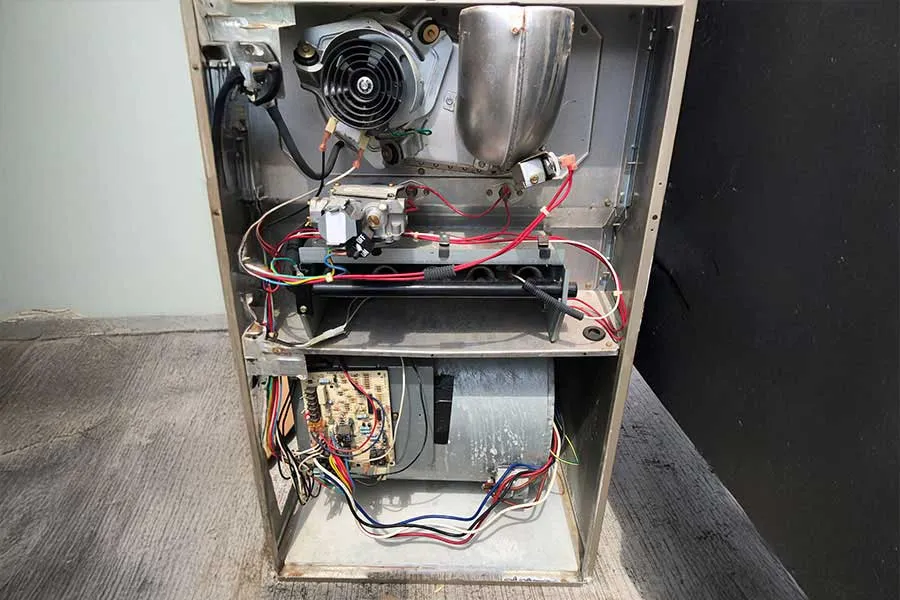
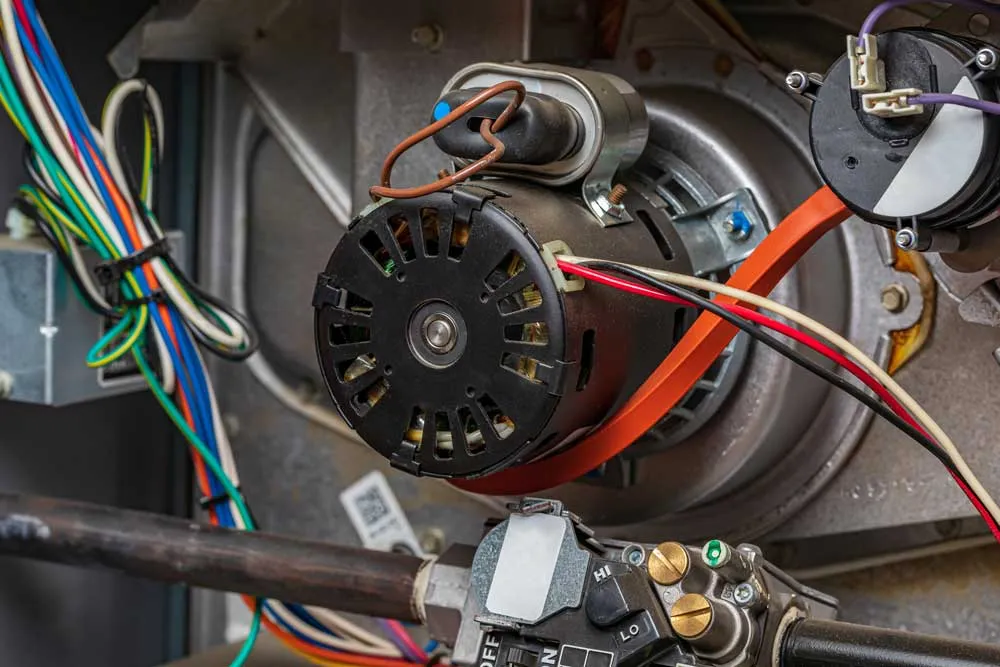
J&M Cooling and Heating starts every furnace call in Caldwell with a full system check, looking at the igniter or pilot assembly, blower motor, heat exchanger, and thermostat wiring before recommending any repair. Because so many homes in the borough were converted from an older heating system at some point, we also check how well the current furnace matches the ductwork it is paired with, since a mismatch there is often the real reason a system cannot keep up. From a furnace that will not stay lit to one that runs constantly without warming the house, we repair the unit already installed rather than assuming replacement is the only option.
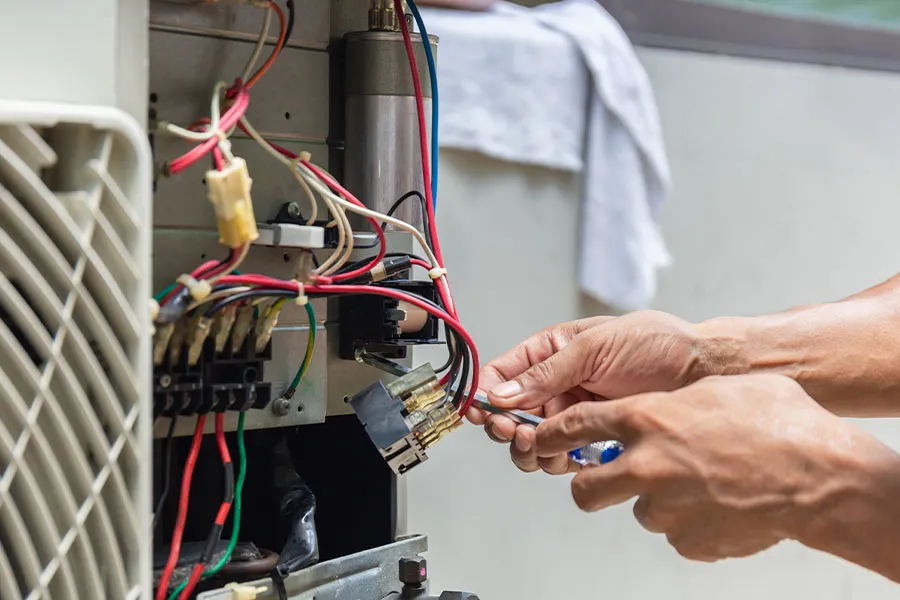
Linda called on a cold January morning after noticing her furnace kept shutting off just minutes after starting up. She lives in an older Colonial not far from downtown Caldwell, in a house that had its heating system converted from oil to gas years before she bought it. Our technician found a dirty flame sensor causing the furnace to shut down as a safety measure, along with a clogged filter restricting airflow through the system. After cleaning the sensor, replacing the filter, and testing a full heating cycle, the furnace ran normally through the rest of the cold snap, and Linda had a clear filter replacement schedule to help avoid the same issue next winter.
Why do so many households across Caldwell call J&M Cooling and Heating when the furnace stops keeping up? Familiarity with the borough’s older homes is a big part of it. Our technicians know what to expect from a furnace paired with retrofitted ductwork or a converted heating system, which means less guessing and a faster path to the actual fix. Clear communication matters just as much. Homeowners get a straightforward explanation of what is wrong and what it will take to fix it, without pressure to approve work the system does not need.
Winters in Caldwell regularly bring nights well below freezing, and a furnace that is already struggling tends to show it during the coldest stretches. Addressing a minor issue early usually prevents a bigger breakdown during a cold snap.
This is common in older Caldwell homes where ductwork was added after the house was originally built. Airflow to upper floors can be restricted, and a technician can evaluate the duct layout to see what can be improved.
Yes. A technician can service a converted system the same way as one that was originally installed as gas, though it helps to mention the conversion so they know what to check first.
This often points to a safety shutoff triggered by a dirty flame sensor, restricted airflow, or a venting issue. A technician can identify which of these is happening and correct it.
An annual check before the heating season starts is a good baseline, and older systems paired with retrofitted ductwork often benefit from that yearly look even more than newer installations.